MICRO SEVEN , inc.® presenting
central office simulators (CO simulators), telephone-cable simulator, caller-ID
simulator, alarm receiver/simulator, MINI-PBX SIMULATORs and telephone line
testers
-now Voiced Multimeter with PC interface
We have provided MINI-PBX
SIMULATORs (Telephone line simulator, or Central Office Simulator(C.O.
Simulator) to telecommunication equipment manufacturers for many years. Our
instruments simulate public telephone lines for many different characteristics.
Our instruments provide 2, 4, 8, and 32 simulated telephone lines for testing
and demonstrating telecommunication equipment. The simple 2-line, LS100-2 may
be used to test 2-modem communications. The 32-line PC300-32AD may be used to
test the Internet applications. All our boxes provide battery-feed, ring signal,
and call progress tones, and accept DTMF or rotary-pulse dialing and loop
start. Other optional features include 20Hz Ring Signal Option, Dual Frequency
Call Progress Tone Option, Satellite Delay Option, Programmable Interface
Option by IEEE-488 and/or RS232C Interfaces, Ground Start Option, 40V Battery
Feed Option, Caller-ID Option, Caller-ID on Call-Waiting Option, Custom Phone
Number Option, and Fax Monitor Option. Distinctive ringing features are
available as standard features to some models. The Line Impairment Option is to
simulate the worst-case long-distance telephone line condition for random
noise, frequency attenuation, and envelope-delay distortion. LS200, LS300, and
PC300 may be configured as 19-inch rack-mount. These simulated telephone lines
are independent from public telephones or PBX systems. We have LS100, LS200,
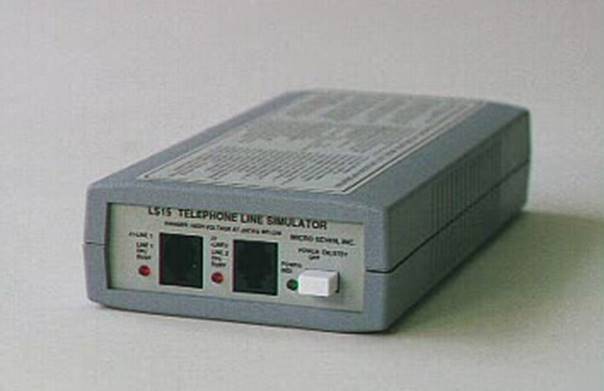
LS300, PC300, and our latest hand-held LS15 product lines. The model LS15 is a
battery-operated unit with caller-ID features, and model LS15-C is our
lowest-cost 2-line telephone line simulator. Audio monitor or outside line
interface is available.
KB10, KB Simulator (new) generates keyboard strokes from RS232
interface. Keyboard scripts may be built using control software. In email
application, send-to address and subject field, and static email text are
preprogrammed. Dynamic email-text is input from RS232 interface with an “email
send” command.
Telephone
line simulator (MINI-PBX SIMULATOR) products:
PC300,
32-line MINI-PBX SIMULATOR (telephone line simulator or CO simulator), with
20Hz ring signal and front-panel switches to select additional 20 dB insertion
losses between lines and to select analog or digital switching circuits. It may
be used as a rack-mount. Serial interface and programming software is available
for programming of telephone numbers, 20 dB insertion losses, dialing method,
and selection of analog or digital switching circuit.
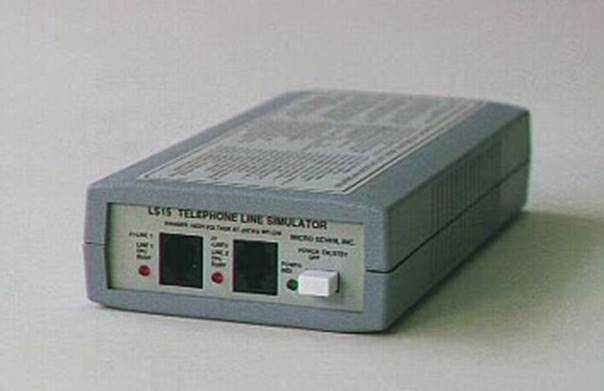
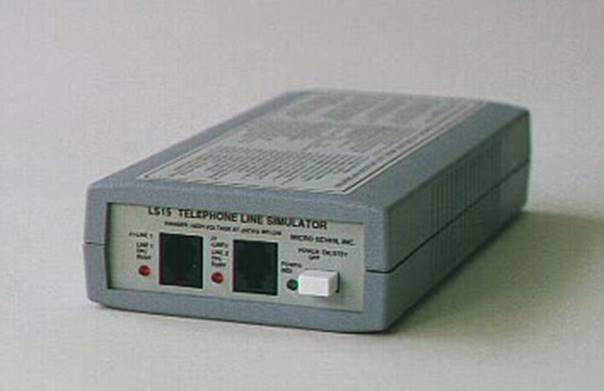
LS15
battery-operated and hand-held telephone line simulator with programmable
telephone numbers, dual-frequency call-progress tones, 20Hz ring-signal,
caller-ID, caller-ID on call waiting, stutter dial-tone, many test tones,
distinctive ring-signal, forced called-party disconnect feature, programmable
network response delay, programmable disconnect signal, simulated PBX mode,
hot-line mode, sleep mode (automatic power shut-down), line impairment mode
with extra signal attenuation and random noise addition, secondary call
progress tone, and optional accessories (car-battery adapter and carrying case)
The RS232C interface or outside-line interface is also available for
non-battery version, model LS15-1. The RS232C option provides programming of
telephone numbers, signal attenuation, caller-ID and other parameters from
Control Software in PC. An outside-line
interface is also available as an option. The simplified message delivery
interface, SMDI , which provides visual message display with serial interface
is also available as an option. The European caller-ID ETS format and Bellcore
format is available in model LS15-1-ETS with serial
port and control software for programming. International power supply option
provides four different power plugs for 90-250V AC input. LS15-N simulates
Japanese telephone line including Japanese caller-ID standard.
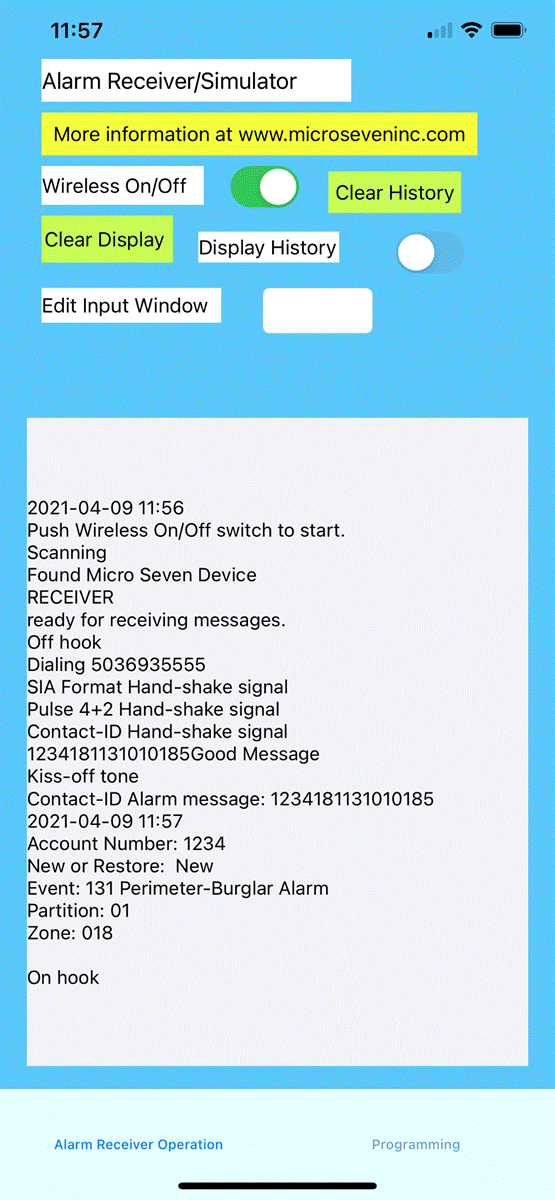
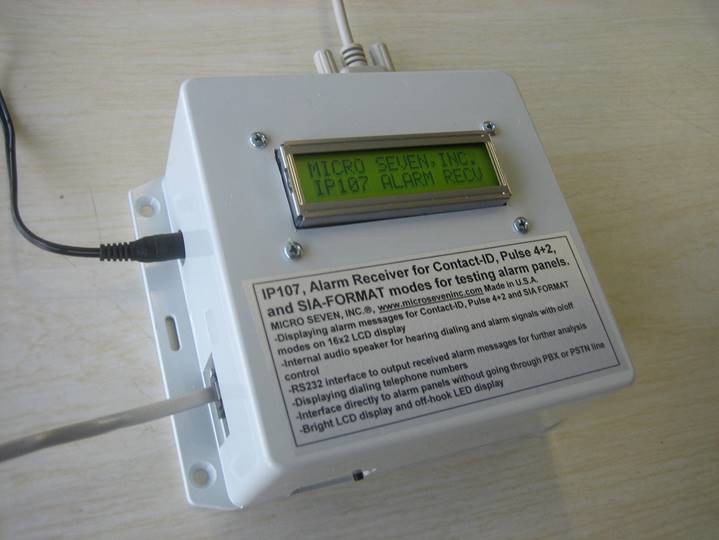
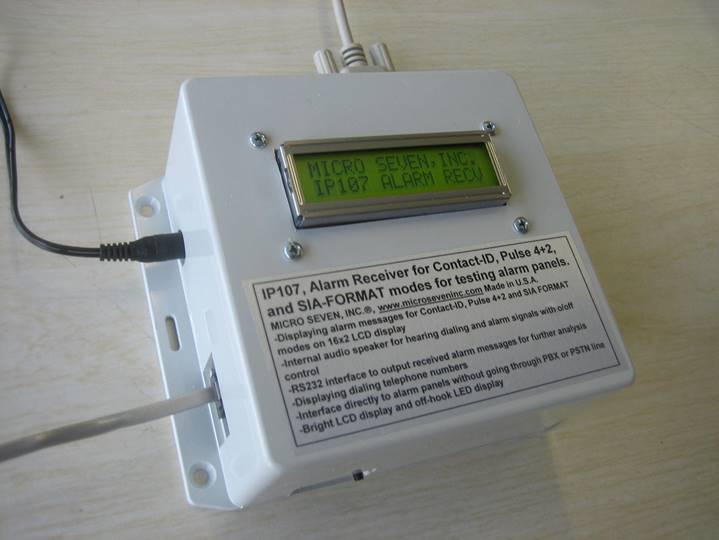
CT300, Email/Contact-ID Alarm Receiver (new) contains
low-cost ADEMCO® Contact ID alarm receiver with regular telephone (FXO) or
inside line interface (FXS). Decoded alarm messages are emailed to any email
addresses automatically by CT300. SMTP server nor email software is not
required. It is low-cost single line device.
CT10, CM10, and CT200, Contact-ID Alarm Receiver contains low-cost ADEMCO®
Contact ID alarm receiver with regular telephone line interface or simulated
telephone line interface. Alarm receiver software with PC interface is
included. Caller-ID receiver and international power adapter are options for
alarm receives with regular telephone line interfaces. CT200 contains dual line
alarm receives with regular telephone line interfaces. With custom central
station software, AP15
may also be used to retransmit or broadcast received alarm messages to any
numbers of alarm receivers on PBX or PSTN.
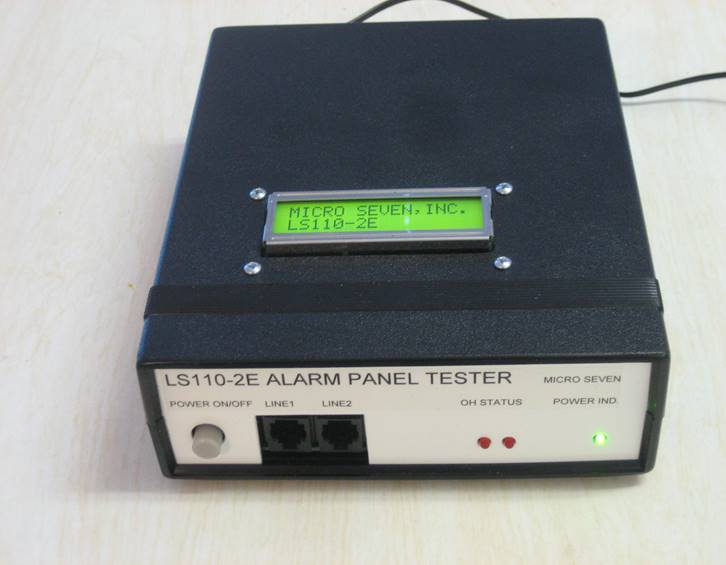
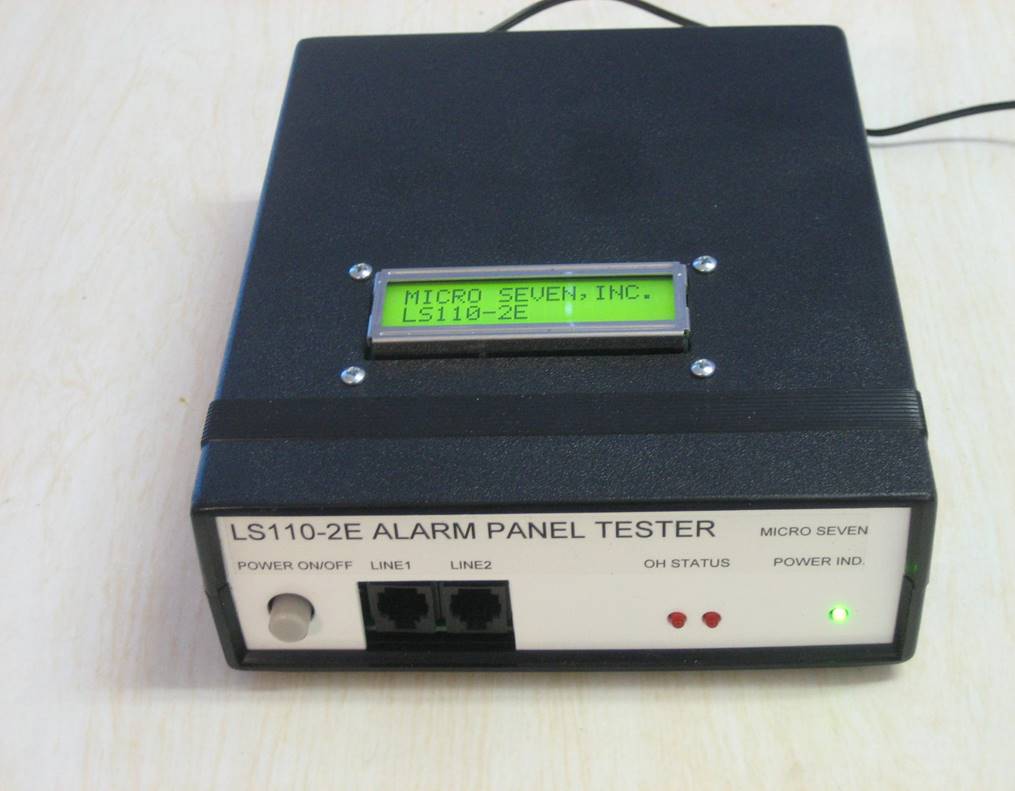
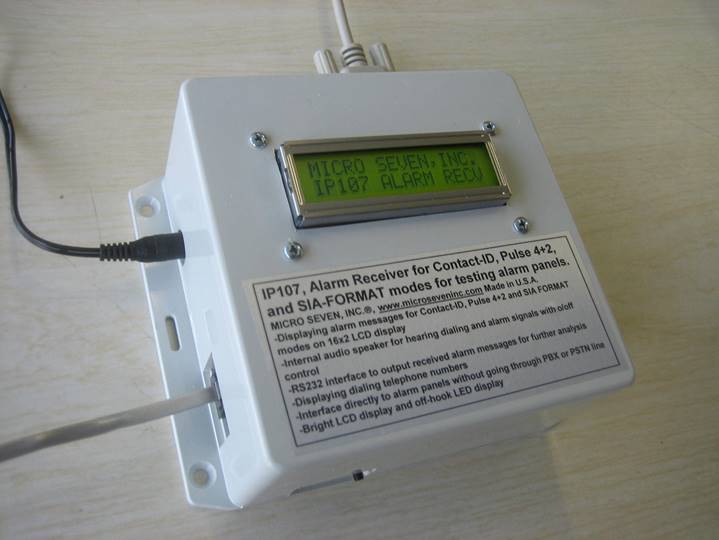
LS15-E contains both Alarm-Receiver Simulator, ADEMCO® Contact ID alarm panel
tester (SIA 1999) and PBX Simulator(telephone line simulator). The
Alarm-Receiver function provides simulated telephone-line and alarm receiver
for testing and demonstrating alarm panels for the Ademco® contact ID Protocol.
The simulated telephone-line functions include generation of
dual-frequency-type dial and ring-back tones, detection of DTMF and
rotary-pulse dialing pulses, and battery-feed function. The LS15-E provides
functions of generating handshake and kiss-off tones, receiving alarm messages,
check-sum calculation and transmitting alarm messages in ASCII format at RS232C
interface to a PC. The LS15E also contains 2-line PBX simulator function, which
is similar to model LS15-C1 listed below. The model LS15-E+ ADEMCO® Contact
ID alarm receiver contains simulated telephone and regular telephone line inputs.
LS15-E+ also contains audio monitor with on-board audio speaker and external
audio jack for external audio amplifier. LS15-E+ does not contain LS15-C1
functions in LS15-E. Caller-ID receiver option (new) is available for LS15E+ to
generate ASCII data for caller’s name and telephone number with alarm message
in both Bellcore and ETS formats. Alarm receiver software, that runs under
Windows systems, that decodes, display alarm messages, stores as text files
like Custom Alarm Receiver Software is provided with LS15E+ (new). PC300-15AR contains fifteen Contact ID alarm
receivers with simulated CO lines and PBX interfaces with one serial interface
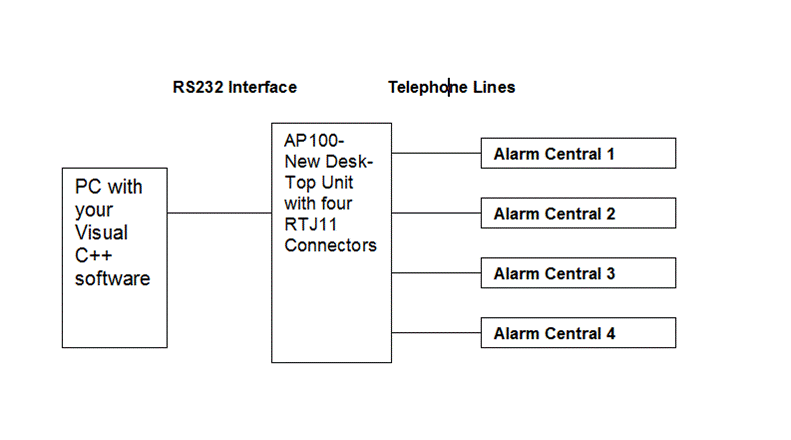
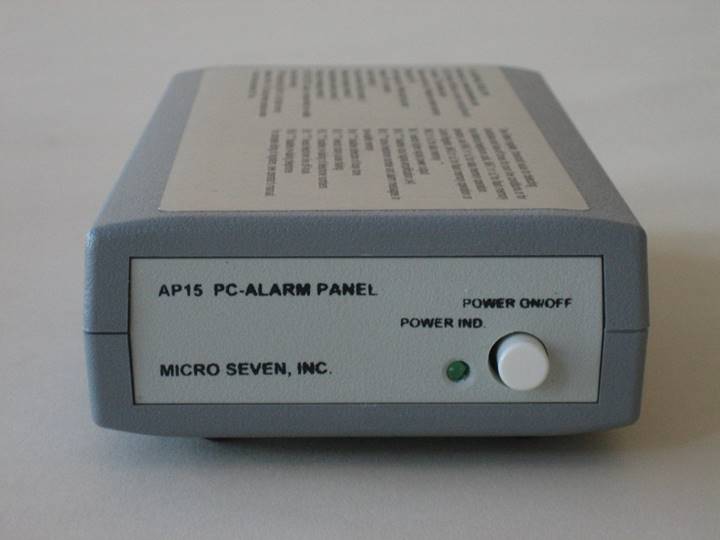
to PC. The model, AP15 or
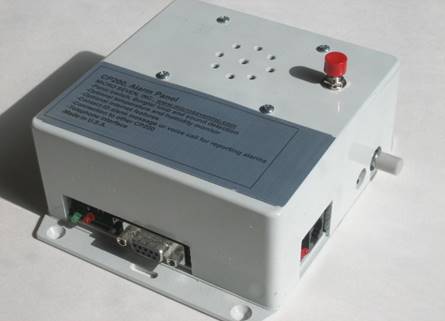
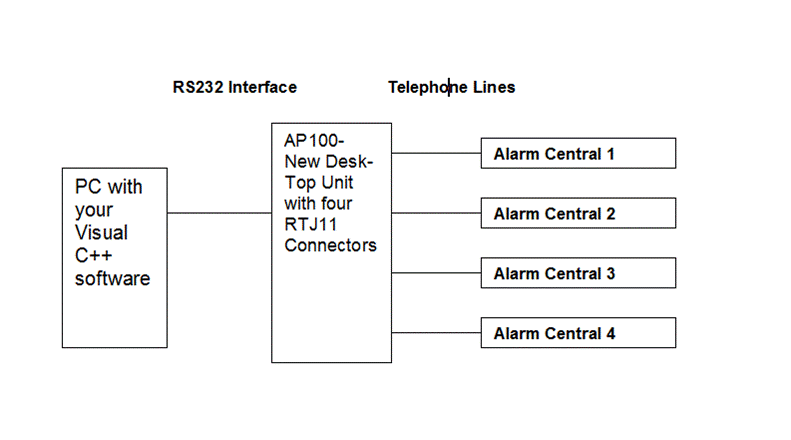
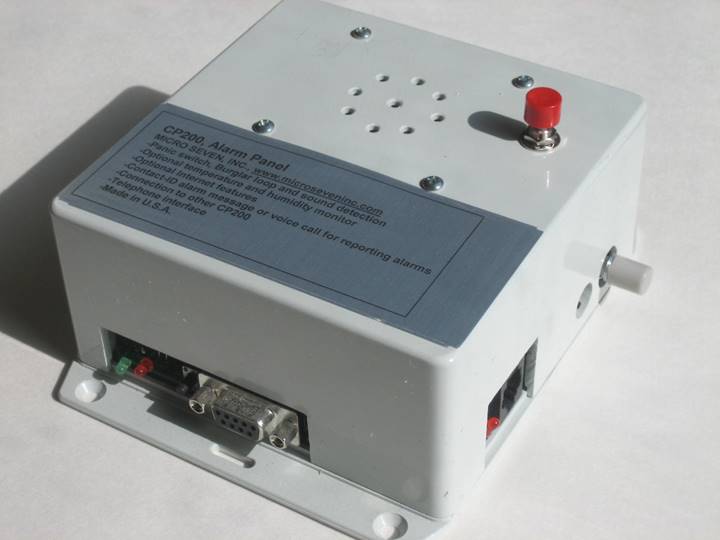
PC300-16AP (new), is an RS232C compatible alarm panel with Ademco® Contact
ID protocol. PC300-16AP contains sixteen AP15s in a 19-inch rack with an RS232C
interface. ASCII commands over RS232C interface start alarm reporting and
transmit alarm messages over telephone lines. AP16 or PC300-16APS (new)
is an RS232C compatible alarm panel with Ademco® Contact ID protocol that
transmits alarm message over simulated telephone line interfacing alarm
receivers directly. Ring signal, battery-feed, and caller-ID signals are
provided for AP16 or PC300-16APS. PC300-16APS contains sixteen AP16 in a
19-inch rack with an RS232C interface. AP16 or PC300-16APS is intended for
testing alarm receivers without telephone companies’ switching circuits.
International power supply option provides four different power plugs for
90-250V AC input. Custom
Alarm Receiver Software , that runs under Windows systems, displays alarm
messages on screen and archiving alarm messages as a disk file for printing. PC300-16AR, sixteen line
Ademco alarm receivers with caller-ID input is also available. Contact-ID alarm
receivers, 2-line, model LS15E-DDXO
(for DXO interfaces) or LS15E-DDXS (for DXS interfaces) are also available.
PC300ARC, Custom Alarm
Panel Test Unit, is available for automatic testing of maximum thirty-two alarm
panels.
LS15-C1 replaces LS15-C with restoring programmed parameters upon power on/off
operations. It is lower-cost new generation telephone line simulator with
programmable telephone numbers, dual-frequency call-progress tones, 20Hz
ring-signal, stutter dial-tone, distinctive ring-signal, forced called-party
disconnect, programmable network response delay, programmable disconnect
signal, simulated PBX mode, hot-line mode, programmable extra signal-insertion
loss, secondary call progress tone, and optional accessories (car-battery
adapter and 230V AC/DC adapter). It runs with a provided AC/DC adapter. The
RS232C option provides programming of telephone numbers, signal attenuation,
caller-ID and other parameters from Control Software in PC. The RS232C option
also displays DTMF/dialing pulse digit inputs. An outside-line interface is
also available as an option. International power supply option provides four different
power plugs for 90-250V AC input. Audio monitor option with a internal speaker
is available as an option. USB power option is available to power
LS15-C1 from USB connector instead of AC/DC power adapter.
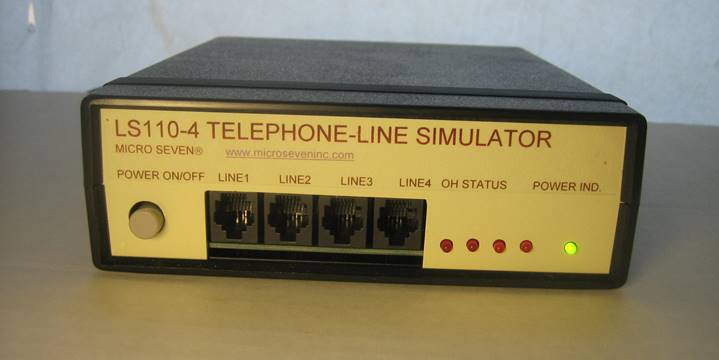
LS100/LS200, (LS100-2A, LS100-4A and LS200-8A) our most popular 2, 4, and 8-line
MINI-PBX SIMULATORs (telephone line simulator or CO simulator) with
single-digit and programmable telephone numbers, pseudo-line impairment with
random noise and 20dB signal attenuation, disconnect signal, network delay, PBX
mode, stutter dial tone, distinctive ring signals, call progress tone selection
between single and dual frequencies, transmit power adjustment potentiometer
for each line, off-hook/busy LED, and ring signal. Please ask for 3-way calling
option/feature with no charge. Options are Multi-Line DTMF Dialer Option, Line
Impairment Option, Satellite-Delay Option, 20Hz Ring Signal Option (adjustable
for frequency and amplitude), Caller-ID option, Serial port Option, Audio
Monitor Option, and Outside-line Interface Option. The model LS200 may also be
used as a rack-mount. LS100-4/BT-CDS provides caller-ID for Bellcore and ETS
formats. New LS100-2TM
for 2 line and LS100-4TM for 4-line simulates PBX circuit which reduces
signal bandwidth and contains quantityzing noise since it employs time-division
multiplexing circuit for switching circuit. LS100-2J, 2-line
Telephone Line Simulator with Line Impairment Option. It simulates the worst
telephone line, which contains frequency attenuation characteristics, random
noise (white noise), and envelope delay distortion. The RS232 serial port is
included to program line impairment conditions, telephone numbers and other
parameters. Five different audio circuit conditions such as random noise
amplitude and envelope delay distortion characteristics may be easily changed
by PC while two modems are connected with transmitting data. LS100-2JX (new)
contains one CO interface (outside line) instead of simulated telephone line to
allow in-series line impairment operation in customers’ existing PBX line.
LS100-2JX is inserted in series with existing PBX lines. LS100-2JX also includes
RS232C interface.
LS200-8G, Caller-ID Test Unit, with adjustable frequency components in caller-ID
data generation and caller-ID on call-waiting.
LS100-4G, Caller-ID Test
System, provides worst-case testing of caller-ID receivers for changing
frequency component and amplitude of caller-ID signals, CAS, and SAS signals with
random noise.
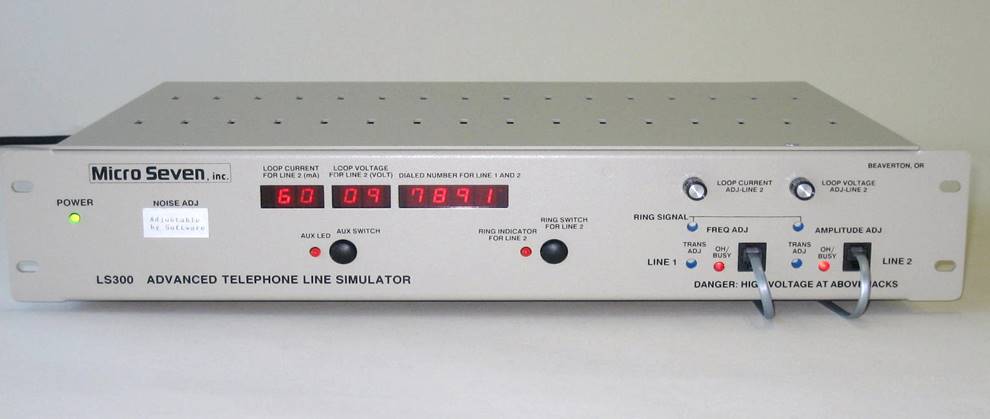
LS300,
Advanced Telephone Line Simulator with displays of dialed numbers, loop
current, loop voltage, and RMS voltage display. It equipped with potentiometers
for adjusting loop current and loop voltage, programming of frequency
attenuation characteristics and random noise insertion, dual frequency call
progress tones, adjustable ring signal for frequency and amplitude, distinctive
ring signal, front-panel ring switch, and optional Caller-ID or Line Impairment
Options. It may be used as a rack-mount.
LS15-2 , PC-Controlled Caller-ID Generator, on-hook caller-ID generator, which
generates ring signal and caller-ID signal at a simulated telephone line via
serial port of PC. TAP interface is a standard.
LS15-A3, Battery-feed and ring signal booster for PBX. It provides flash-hook
function. It also generates disconnect signal. Caller-ID compatible.
ST10-2 provides
stand-alone or PC-assisted testing of incoming lines for fax machines or alarm
receivers. Polling rate, telephone number, type of receivers for either fax
machine or alarm receivers. For Contact ID type alarm receivers, alarm receiver
test message is sent to check complete testing of telephone lines and alarm
receivers. On error conditions, sound is heard at a built-in speaker and error
report is generated. Programmable voice reporting of error conditions is
available in model ST10-3.
RT10
, Telephone-Call Router to receive a call at one line, and originate another
call at the other line. Model RT15 contains a call-back
capability with caller-ID receiver, which receives caller’s telephone number
without answering calls, dials the caller’s number, inputs telephone number,
flash-hook and dial the telephone number, flash-hook and hangs up a call and
call back to a same line. RT300 contains sixteen RT10s in a 19-inch rack-mount
case.
CS10 Telephone-Cable Simulator simulates maximum 7.5km
(CS10) or 15 km (CS10-1) of AWG26 twisted copper pair for digital and analog
application. CS10 is specially designed for ADSL where a single twisted copper
pair is used for high-speed digital and analog voice. CS10 contains four RJ11
connectors for digital input, analog input, digital output, and analog output.
Each 1 km cable segment may be turned on or off by RS232C interface by PC.
After programmed, CS10 may be used in the field without power. CS10-2
simulating 7.5 km cable is intended for 4-wire loop with 8-pin jack. Custom
cable simulator is available.
CD15 Caller-ID Receiver/RS232C receives caller-ID data
from telephone line, and it sends caller’s data to PC via RS232C interface. A
caller’s telephone number is also announced to an audio speaker inside CD15.
CD15 is available in three models among Bellcore FSK, ETS FSK, and DTMF
caller-ID models.
PC300-CIDCONV converts ETS, UK, DTMF or Japanese caller-ID signals
to Bellcore caller-ID signals. Main purpose of PC300-CIDCONV is for American
corporation to market products in oversea market quickly without engineering to
adapt for each area and different standard. It also converts
private/out-of-area data to standard telephone number and name so that calls
are not blocked. PC300-CIDCONV is a 19-inch rack-mount instrument for holding
16 channels. Single line unit, product LS15-CIDCONV is also available.
202 Modem is half-duplex
dial-up modem with 1200 baud FSK type modulation.
Other
products:
SP10 RS232/Voice generator SP10 provides voiced
measurement data for test and medical instruments. SP10 generates voice
segments of numerical data, legends, and short speech at a built-in speaker by
ASCII commands from PC or other controllers in test and measurement and medical
instruments. Voice and speech segments, which are previously recorded through a
built-in microphone, may be numeric data, words, or short speech. SP10 provides voiced data output at a
built-in speaker or audio connector for external amplifier/speaker. Examples
are “Blood pressure is 120 over 70”, “Temperature is 36.5 degree C”, “ 1.000VRMS”,
etc. A medical power supply is
available as an option. You can record your voice. You can record your
customized voice data in your own voice. Low cost and quantity discount
available. Telephone line interface is available to dial a telephone number and
deliver voiced data.
CD31, Telephone-Remote
Controller utilizes DTMF data input to control output circuits at remote location
after CD31 answers with off-hook condition after detecting ring signal. It
controls one of four outputs circuits, relay circuit with normally open and
normally closed terminals and three open-collector NPN transistor circuits.
Screw terminals are provided for telephone line, power, and output circuits. A
popular audio connector is provided to monitor audio on incoming telephone line
at an external audio amplifier. Four digit-long passwords or PIN are
programmable for fifty users or employee. Each user/employee may be authorized
any output among four output circuits. Output on/off duration is also
programmable.
PM10, It monitors temperature and sound at your home
or business. It makes temperature measurement by using a provided temperature
probe. When the measured temperature exceeds a maximum temperature threshold or
goes below a minimum temperature threshold, it sounds alarm siren, or it dials
a pre-programmed telephone number for reporting a high or low temperature in
human voices and transmitting digital alarm signal, Security Industry
Association’s Digital Communication Standard-Ademco ® Contact ID format, which is compatible with popular alarm receivers
including our model LS15E+. It also detects abnormal sound at a built-in
microphone, and it sounds alarm siren, or it reports excessive sound in human
voice via telephone line after dialing the telephone number, or it transmits
digital alarm signal. It also continuously generates public announcement or
conversation while doing temperature and sound monitoring voice message. PM10
may be called remotely via telephone by you to obtain temperature or to
listen-in or to talk via a built-in speaker.
VM10 provides voiced
measurement data output in your own voice in any language. The measurement
includes DC Volt, AC Volt, resistance, and temperature. The measurement mode
includes voice-trigger mode for starting A/D with audio input through a
built-in microphone, value-change mode for starting A/D automatically for input
exceeding certain value, continuous mode, and computer interface mode. VM10's
voiced measurement data output eliminates looking of display data on
conventional display; thus, the value-change mode provides automatic voiced
data without looking at a display area. Instead of hearing voiced data through
a built-in speaker, measurement data is also heard through the same earphone as
a portable audio source. Technicians and engineer may hear their favorite music
while obtaining voiced measurement data. Each voice segment for numerical and
legend voice element is programmable via a built-in microphone or external
microphone input by using control software, and the recorded voice may be saved
at a file in a computer or downloaded into VM10. Therefore, VM10 is truly
capable to produce voiced measurement data for any language in the world. The serial port using RS232 and ASCII
commands allows automatic measurement.

Products shown in the above picture are:
LS15 (top)
LS100-4A/LS1002J
LS200-8A
LS300
PC300 (bottom)
Operator’s manual
for LS100-2A, LS100-4A and LS200-8A
Note: Operator’s manual for obsolete LS100-2, LS100-4, and LS200-8 is not
available.
OEM
programs: The following telephone-related products with caller-ID receivers are
available for OEM quantities. Please consult our factory with product ID code “OEM programs”. It requires initial engineering fee
and minimum quantity requirement.
1.
Remote
control box, which inputs caller-ID data in incoming calls and controls output
relay. Upon turning on off-hook relay, it inputs PIN to control three other
drivers or relays. Programming is done via RS232 interface.
2.
Ademco
Contact ID alarm receiver, model LS15EX with FXO and/or FXS interface to
interface your alarm panels. It inputs incoming caller-ID data for caller
identifications. Programming is done via RS232 interface.
3.
Custom
dialer with caller-ID reception, DTMF reception, flash memory, tone generation,
voice generation, ring signal generation, battery-feed generation, caller-ID
generation and RS232 interface.
Please contact
us for any technical support or custom configurations for your applications.
_____________________________________________________
Micro Seven,
Inc.
Mailing address:
P.O. Box 5597 Beaverton, OR 97006
Street address:
1095-K N.E. 25th Ave., Hillsboro, OR 97124
Phone:
503-693-6982, Fax: 503-693-9742
e-mail: mailto:sales@microseveninc.com
Updated on
06-09-07.